
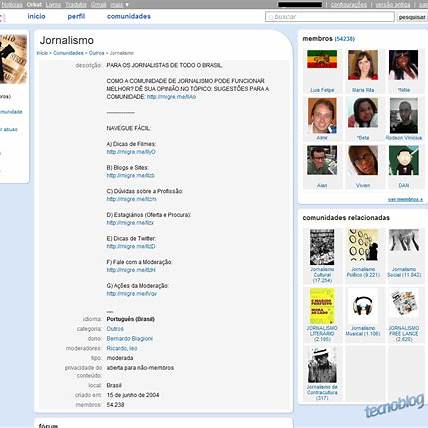
Orkut Community Page
Introduction
Before Facebook became the global social media juggernaut we know today, there was Orkut, a platform that captured the hearts of millions in Brazil. Launched in 2004 by Google, Orkut may have faded into digital history by 2014, but its influence on social networking and marketing strategies is undeniable. At its peak, over 90% of Orkut’s traffic came from Brazil, where the platform became an online cultural epicenter.
In this post, I explore how Orkut’s success and eventual decline provide valuable lessons for social media marketing, particularly around cultural relevance, platform innovation, and user experience.
Why Orkut Took Off in Brazil
From my perspective, Orkut thrived in Brazil because it naturally aligned with the country’s social fabric. Here’s what stood out:
- Community-First Approach: Orkut allowed users to join communities based on shared interests, locations, schools, or workplaces. This feature matched the collectivist nature of Brazilian culture, where belonging to a group is essential.
- Invite-Only Exclusivity: Getting on Orkut initially required an invitation, which added a level of prestige. At the time, this exclusivity enhanced its appeal, especially among tech enthusiasts and young professionals.
- Simplicity and Accessibility: Orkut’s clean design and user-friendly interface made it easy for first-time internet users to join and engage. This feature was key in Brazil, where many users accessed the web via cybercafés.
- Google’s Trust Factor: As a Google product, Orkut enjoyed built-in credibility, which helped it grow faster in markets where digital trust was still being established.
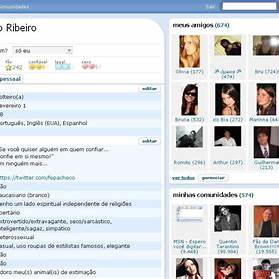
Orkut User Profile Page
Marketing Lessons from Orkut’s Ecosystem
As a content creator and marketer, I see Orkut as an early sandbox for digital marketing strategies that we still use today:
- Community Engagement: Brands could build their communities or join existing ones to interact directly with users, creating authentic engagement opportunities.
- Word-of-Mouth Power: The platform encouraged user-generated content, including reviews and product recommendations—precursors to the influencer marketing we see today.
- Localized Campaigns: Traditional outdoor advertising is restricted in many parts of Brazil, so Orkut gave brands a vital digital channel to reach their audiences through targeted messaging.
Where Orkut Fell Short
Despite its early dominance, Orkut didn’t evolve fast enough to keep users engaged. Here’s where I believe Orkut fell short:
- Lack of Feature Innovation: Facebook outpaced Orkut by continually updating its platform with features like photo tagging, a real-time feed, and integrated messaging. Orkut’s stagnation left users wanting more.
- Poor Multimedia Support: Video plays a significant role in Brazil’s online culture. Orkut didn’t support video sharing well, which became a dealbreaker as platforms like YouTube and Facebook began integrating rich media.
- Privacy Limitations: The platform’s basic privacy settings couldn’t keep up with growing concerns around online safety. In contrast, newer platforms offered granular controls that empowered users.
- Technical Glitches: Frequent bugs and slow load times frustrated users, ultimately pushing them toward more stable platforms.
In terms of Brazilian user numbers, Facebook surpassed Orkut by 2011, and Orkut underwent an official shutdown in 2014.
What We Can Learn Today
Orkut’s journey offers several enduring lessons for today’s marketers:
- Culture Matters: To build strong user bases, platforms and brands must resonate with local values and behaviors.
- Keep Innovating: Technology evolves quickly and staying competitive means continuously updating features and responding to user needs.
- Prioritize UX and Privacy: Seamless functionality and trustworthy privacy controls are non-negotiable.
- Listen to the Audience: Orkut failed to pivot when user demands changed—a reminder that social media success hinges on adapting to evolving expectations.
Conclusion
Reflecting on Orkut’s rise and fall has been a fascinating dive into how culture, technology, and marketing intersect. Even though the platform is no longer in existence, its impact continues to shape our current approach to digital communities and marketing strategies. As someone passionate about the evolving landscape of social media marketing, I see Orkut’s story as both a blueprint and a cautionary tale, reminding us that platforms must evolve or risk being left behind.
 Lwms69 Blog
One response to “Orkut in Brazil: A Social Media Pioneer’s Rise and Fall Through a Marketing Lens”
Hi Lamont,
First, I’d like to comments on how much I really enjoyed reading your blog post on Orkut’s legacy. You presented the content in such a clean and well-organized layout, it made a strong first impression. The post was visually appealing, easy to navigate, and the way you structured your sections made the information flow naturally. I think the layout really enhanced the readability, and it helped keep me engaged from start to finish.
Content-wise, you did an excellent job breaking down Orkut’s rise and fall in a way that was both informative and easy to understand. I liked how you started with Orkut’s initial popularity, especially in international markets like Brazil and India, and then transitioned into the factors that led to its decline. You explained Google’s missteps clearly, especially their lack of innovation and failure to adapt to user expectations, two key reasons that ultimately made the platform irrelevant.
What really stood out was your comparison to modern platforms. Highlighting how Instagram and TikTok continue to evolve based on user behavior drove your main point home: in the world of digital media, standing still means falling behind. Your post did a great job of connecting past lessons to current trends, which made the topic feel both timely and relevant.
Overall, this was a great read, easy to follow, visually appealing, and full of insight. You balanced a conversational tone with thoughtful analysis really well. Thanks for sharing this!
Best.
Jeff
LikeLike